

Green Card Questions.
Immigration Basics Questions.
Family Immigration Questions.
Employment Based Immigration.
Temporary Non-Immigrant Questions.
Global Mobility Questions.
Green Cards
Find answers to frequently asked questions about green cards, including marriage and other family-based green cards. All questions are answered by Fengey Immigration experts.
No, you do not necessarily need a lawyer to apply for a green card through marriage.
However, having legal support can be beneficial. A lawyer can review your application to ensure your information is correct and your evidence is strong, which can lessen the chances of your green card application being denied.
Learn more:
Why Choose Fengey Over a Lawyer
On average, you can expect legal fees to range from a few thousand dollars to several thousand dollars for marriage green card cases.
For 2024, entry-level lawyers typically charge a starting rate of around $2,000 for marriage-based green card services.
More experienced lawyers can charge up to $8,000. These include legal support, document preparation, representation during interviews, and ongoing guidance.
Top-tier law firms and lawyers can charge between $8,000 to $15,000, or even more. These costs are often justified by the firm’s standing, comprehensive legal assistance, tailored service, and representation in intricate matters.
The cost of engaging a lawyer for a U.S. green card via marriage can vary significantly based on various factors. These include the intricacy of your case, the attorney’s level of experience and specialization, your location, and the specific services required.
Yes, even after obtaining a green card through marriage, there are still circumstances under which you could be deported.
While a marriage-based green card is a significant step toward secure legal residency in the United States, it doesn’t offer absolute protection against deportation.
Being aware of the following conditions can help you maintain your status:
- Genuine Relationship: Ensure that your marriage is genuine and not solely for the purpose of immigration benefits to avoid risks of deportation.
- Self-Sufficiency: Minimize dependency on public assistance as much as possible, as this can be a factor in deportation decisions.
- Adherence to Laws: Stay connected to communities or activities that promote safety and legality, avoiding any associations that might be seen as threats to national security.
- Compliance with Immigration Laws: Keep on top of your obligations such as maintaining continuous residence, working only with proper authorization, and adhering to the terms of your visa.
- Avoiding Criminal Activity: Stay clear of any criminal activities; serious crimes can lead to deportation proceedings.
Remember, staying informed and proactive about your rights and responsibilities as a green card holder is key to securing your future in the United States.
Yes, a U.S. company can sponsor a green card for a foreign national employee based on a full-time, permanent job offer. Many jobs in the United States do sponsor green cards for foreign nationals.
The process involves the employer acquiring an approved Application for Permanent Labor Certification from the U.S. Department of Labor (DOL) in most cases. Following this, the employer can file Form I-140, Immigrant Petition for Alien Worker, with U.S. Citizenship and Immigration Services (USCIS) on behalf of the foreign national.
Employees who can be sponsored include those who qualify under various employment-based (EB) immigrant visa categories, such as professionals with advanced degrees, skilled workers, or individuals with extraordinary abilities in their fields.
Filing the petition signifies the employer’s readiness to hire the employee upon approval.
Accelerate the hiring process for foreign talent: Request a demo
Always tell the immigration officer the truth when asked. Even so, it is best to avoid having to say any of the following:
- “I’m not familiar with U.S. immigration laws.”
- “Actually, I have applied for asylum in another country.”
- “I don’t have travel insurance.”
- “I don’t know where I’ll be staying.”
- “I’m not sure about the details of my visa application.”
- “I’ve been denied a visa before.”
- “I’m still figuring out my immigration status.”
- “I don’t have proof of medical examinations or vaccination proof.”
- “I don’t know how to comply with visa conditions during my stay.”
- “Do I look like a terrorist to you?”
- “Can I engage in business activities beyond those allowed by my visa?”
- “I have plans of volunteer work even without authorization.”
- “I plan to travel to restricted areas.”
- “Can you tell me more about the consequences of violating visa rules?”
- “I intend to take each day as it comes and engage in freelance or independent work with or without authorization.”
- “Is the immigration process really this slow?”
- “I don’t have a return ticket yet.”
- “I plan to join election campaigns and root for my chosen candidate in the country.”
- “I want to engage in demonstrations and rallies for various causes.”
The fastest ways to get a green card or to obtain permanent residency in the U.S. are through the following methods:
- Immigration through Family Reunification: 9 months to 5 years
- Immigration through Marriage to a U.S. Citizen: around 10 months
- Immigration of a Political Asylum to the USA: within 1 year
- Immigration of Extraordinary Ability Individuals: 1 to 2 years
- Investment Immigration: 12 to 18 months
Further details about green card timelines.
Immigration through Family Reunification: Coming to the U.S. by reuniting with family can take. It is quicker if the immigrant is a parent, spouse, or unmarried child under 21 of a U.S. citizen.
Immigration through Marriage to a U.S. Citizen: The first step is to acquire a temporary green card which can take around 10 months. Then, you need to prove that your marriage is valid to USCIS within 2 years to secure permanent resident status.
Immigration of a Political Asylum to the USA: Getting approved for asylum means getting your green card within 1 year after passing the interview with an immigration officer. Typically, this interview happens within 2 months of submitting your petition.
Immigration of Extraordinary Ability Individuals: EB-1 visas for those with extraordinary abilities are prioritized, with petitions processed swiftly. Premium processing can expedite an EB-1A or B visa to obtain a green card within 1 year. EB-1C visas for outstanding managers/directors may take 18 to 24 months.
Investment Immigration (EB-5): An EB-5 investment visa initially grants a temporary green card for 12 to 18 months, leading to permanent residency in about five to six years from the petition date.
One key point to remember is that there are factors to consider that can affect processing times for a green card. These include:
- Country of Origin
- Visa Category
- Priority Date
- Caseload and Demand
- Request for Evidence (RFE)
- Backlogs
- Regional Policies
Immigration Basics
Find answers below to the most commonly asked questions about immigration in general, including the basics of green cards, various types of work visas, and the U.S. immigration system.
No, you do not necessarily need a lawyer to apply for a green card through marriage.
However, having legal support can be beneficial. A lawyer can review your application to ensure your information is correct and your evidence is strong, which can lessen the chances of your green card application being denied.
Learn more:
Why Choose Fengey Over a Lawyer
On average, you can expect legal fees to range from a few thousand dollars to several thousand dollars for marriage green card cases.
For 2024, entry-level lawyers typically charge a starting rate of around $2,000 for marriage-based green card services.
More experienced lawyers can charge up to $8,000. These include legal support, document preparation, representation during interviews, and ongoing guidance.
Top-tier law firms and lawyers can charge between $8,000 to $15,000, or even more. These costs are often justified by the firm’s standing, comprehensive legal assistance, tailored service, and representation in intricate matters.
The cost of engaging a lawyer for a U.S. green card via marriage can vary significantly based on various factors. These include the intricacy of your case, the attorney’s level of experience and specialization, your location, and the specific services required.
Yes, if you have submitted an Affidavit of Support.
Marrying an immigrant is a wonderful step, and it comes with important responsibilities to understand. One is the Affidavit of Support, a legal agreement in which you pledge to financially support your spouse. This helps ensure they have the resources to succeed and can integrate without depending on public assistance programs.
Typically, this obligation continues until your spouse becomes a U.S. citizen, accrues 40 qualifying work quarters in the U.S. (roughly 10 years), permanently departs the country, or passes away.
Learn more:
Everything you need to know about the Affidavit of Support (USCIS Form I-864)
If any of the categories below apply to your situation, you may not be eligible to sponsor an immigrant in the United States:
1. Those with a criminal history including:
- Aggravated assault or battery
- Child abuse or neglect
- Domestic violence
- Drug trafficking or distribution
- Fraud or financial crimes
- Human trafficking
- Theft, fraud, or dishonesty
- Sexual offenses
- Terrorism-related offenses
2. Those who are not a lawful permanent resident or citizen of the United States
3. Previous sponsors of immigrants who later became public charges
If you’re a foreign worker looking to work in the United States, here are some tips to boost your chances of getting sponsored for a work visa by a U.S. employer:
- Understand Visa Options
- Networking
- Research Companies
- Valuable Skills
- Language Proficiency
- Educational Background
- Work Experience
- Professional Image
- Customize Applications
Learn more about each of these tips below:
Understand Visa Options
Educate yourself about different work visa options and their requirements. Knowing what your visa options and eligibility are will help you navigate the job search and visa sponsorship process smoothly.
Networking
Build professional connections through networking events and online platforms. Networking can open doors to job opportunities and visa sponsorship.
Research Companies
Look for companies known for sponsoring visas and check their job postings regularly.
Valuable Skills
Develop skills that are highly sought-after in the U.S. job market, such as analytical thinking, management skills, digital marketing, full stack development, web design, software development, SQL, AI, and more. Acquiring these skills can make you more appealing to potential employers.
Language Proficiency
Improve your English. Being fluent in English not only helps with communication but also makes you a more attractive candidate.
Educational Background
Obtain relevant education and qualifications that match the job requirements. This shows employers that you’re well-prepared for the role.
Work Experience
Gain experience in your field, both locally and internationally, to demonstrate your competence and suitability for U.S. employers.
Professional Image
Maintain a professional online presence and conduct yourself professionally and confidently in interviews.
Customize Applications
Personalize your resume and cover letter for each job application. Elaborate on how your skills and experiences align with the employer’s requirements.
Learn more:
Check out the different types of U.S. work visas.
Always tell the immigration officer the truth when asked. Even so, it is best to avoid having to say any of the following:
- “I’m not familiar with U.S. immigration laws.”
- “Actually, I have applied for asylum in another country.”
- “I don’t have travel insurance.”
- “I don’t know where I’ll be staying.”
- “I’m not sure about the details of my visa application.”
- “I’ve been denied a visa before.”
- “I’m still figuring out my immigration status.”
- “I don’t have proof of medical examinations or vaccination proof.”
- “I don’t know how to comply with visa conditions during my stay.”
- “Do I look like a terrorist to you?”
- “Can I engage in business activities beyond those allowed by my visa?”
- “I have plans of volunteer work even without authorization.”
- “I plan to travel to restricted areas.”
- “Can you tell me more about the consequences of violating visa rules?”
- “I intend to take each day as it comes and engage in freelance or independent work with or without authorization.”
- “Is the immigration process really this slow?”
- “I don’t have a return ticket yet.”
- “I plan to join election campaigns and root for my chosen candidate in the country.”
- “I want to engage in demonstrations and rallies for various causes.”
Read more:
All About U.S. visa interviews
To find out the date and time of your USCIS interview, do the following:
- Log in to your USCIS online account regularly to stay up-to-date on important information, such as interview dates.
- Be on the lookout for your appointment notice. Once USCIS schedules your interview, they will send you a notice with all the details, such as the date, time, and location of your interview.
- Watch out for any letters from USCIS in your mailbox. Interview notices are also sent by mail.
In case you haven’t received your appointment notice or if you want to know more about your scheduled date of interview, contact USCIS.
Read more:
U.S. visa interviews: What to Expect
Supporting an immigrant typically doesn’t come with direct fees. However, some sponsors choose to cover the expenses of the immigration process, which can cost $1,000 or more. Sponsors must also meet the income requirements to be eligible to support their family to live in the U.S.
The cost of sponsoring someone to live in the USA depends on the type of sponsorship. Here’s a general overview of the costs for different sponsorship categories:
Family-Based Sponsorship:
- Form I-130 (“Petition for Alien Relative”) filing fee: $625 (online); $675 (paper)
- Form I-485(“Application to Register Permanent Residence or Adjust Status”) filing fee: $1,440
- Additional expenses may include lawyer fees, medical examination costs, and similar charges.
Employment-Based Sponsorship:
- Form I-140 (“Immigrant Petition for Alien Worker”) filing fee: $715
- Form I-485(“Application to Register Permanent Residence or Adjust Status”) filing fee: $1,440
- Other potential costs can include labor certification fees, premium processing fees, legal fees, and associated expenses.
Diversity Visa Lottery:
- Application fee: None (Additional processing fees will apply once selected)
Investor-Based Sponsorship (EB-5 Visa):
- Minimum investment amount: $1.8 to $1.9 million (or $900,000 in targeted employment locations). Additional costs may involve legal fees, administrative charges, and investment-related expenses.
Refugee or Asylum Sponsorship:
- Costs vary widely and may include legal representation fees, application charges, and other related expenses.
These figures are approximate and may vary based on individual circumstances, legal fees, and any extra services needed during the sponsorship process.
Learn more:
Green Card Sponsor Income Requirements
Your friend, as a non-family member, cannot directly sponsor you to live in the U.S. Only a family member or spouse who is an American citizen or green card holder can serve as your primary sponsor for immigration purposes.
However, your friend can offer financial support to you as a joint financial sponsor. As such, your friend will have responsibilities including providing financial documentation and demonstrating their ability to support you financially. This will ensure your financial stability and eligibility to immigrate to the U.S.
Learn more:
A Guide to Financial co-sponsors
The fastest ways to get a green card or to obtain permanent residency in the U.S. is through the following methods:
- Immigration through Family Reunification: 9 months to 5 years
- Immigration through Marriage to a U.S. Citizen: around 10 months
- Immigration of a Political Asylum to the USA: within 1 year
- Immigration of Extraordinary Ability Individuals: 1 to 2 years
- Investment Immigration: 12 to 18 months
Further details about green card timelines.
Immigration through Family Reunification: Coming to the U.S. by reuniting with family can take. It is quicker if the immigrant is a parent, spouse, or unmarried child under 21 of a U.S. citizen.
Immigration through Marriage to a U.S. Citizen: The first step is to acquire a temporary green card which can take around 10 months. Then, you need to prove that your marriage is valid to USCIS within 2 years to secure permanent resident status.
Immigration of a Political Asylum to the USA: Getting approved for asylum means getting your green card within 1 year after passing the interview with an immigration officer. Typically, this interview happens within 2 months of submitting your petition.
Immigration of Extraordinary Ability Individuals: EB-1 visas for those with extraordinary abilities are prioritized, with petitions processed swiftly. Premium processing can expedite an EB-1A or B visa to obtain a green card within 1 year. EB-1C visas for outstanding managers/directors may take 18 to 24 months.
Investment Immigration (EB-5): An EB-5 investment visa initially grants a temporary green card for 12 to 18 months, leading to permanent residency in about five to six years from the petition date.
One key point to remember is that there are factors to consider that can affect processing times for a green card. These include:
- Country of Origin
- Visa Category
- Priority Date
- Caseload and Demand
- Request for Evidence (RFE)
- Backlogs
- Regional Policies
Learn more:
The latest USCIS Processing Times
Yes, private individuals can sponsor immigrants under certain circumstances.
This usually involves providing financial support and ensuring the immigrant has the means to live in the U.S. without relying on public assistance. The most common way to do this is through the Affidavit of Support, where the sponsor commits to financially supporting the immigrant and shows proof of their income and assets.
Keep in mind that sponsorship requirements can differ based on the immigrant category and individual case details.
Learn more:
Visa Sponsorship, Explained
Family Immigration
Get answers to frequently asked questions about family-based immigration, including marriage green cards, and visas for parents and children. All FAQs are answered by Fengey Immigration experts.
Yes, USCIS generally requires the Form I-130 petitioner to appear for the interview with the principal Adjustment of Status applicant for family-based applications.
Learn more:
Everything you need to know about Form I-130
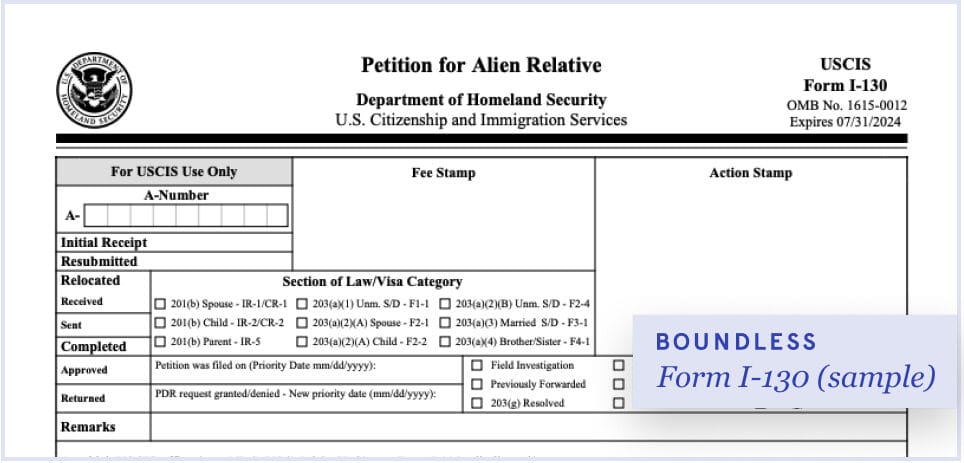
Reasons you may be required to attend an interview after submitting your I-130 Petition for Alien Relative:
- You’re a U.S. citizen filing for parents who are in the U.S. and have filed Form I-485
- You’re a U.S. citizen filing for your unmarried children under the age of 21 who are in the U.S. and have filed Form I-485
- You’re a permanent resident petitioning for your children who are younger than 14 years old
No, you do not necessarily need a lawyer to apply for a green card through marriage.
However, having legal support can be beneficial. A lawyer can review your application to ensure your information is correct and your evidence is strong, which can lessen the chances of your green card application being denied.
Learn more:
Why Choose Fengey Over a Lawyer
On average, you can expect legal fees to range from a few thousand dollars to several thousand dollars for marriage green card cases.
For 2024, entry-level lawyers typically charge a starting rate of around $2,000 for marriage-based green card services.
More experienced lawyers can charge up to $8,000. These include legal support, document preparation, representation during interviews, and ongoing guidance.
Top-tier law firms and lawyers can charge between $8,000 to $15,000, or even more. These costs are often justified by the firm’s standing, comprehensive legal assistance, tailored service, and representation in intricate matters.
The cost of engaging a lawyer for a U.S. green card via marriage can vary significantly based on various factors. These include the intricacy of your case, the attorney’s level of experience and specialization, your location, and the specific services required.
USCIS denied around 24% of K1 fiancé visa applications in 2023, with 13,833 out of 56,494 applications denied. The denial rate in the fourth quarter of FY 2023 was notably higher compared to the 19% denial rate in 2022.
Learn more:
Yes, you can marry your fiancé while your I-129F petition is pending. However, getting married before the approval of the I-129F would mean you then need to file a spousal visa application (CR-1) rather than the fiancé visa (K-1) petition. If you plan on getting married while your I-129F petition is still in progress, it’s best to seek advice from an immigration attorney.
Learn more about the eligibility requirements, processing time, and costs of Form I-129F (Petition for Alien Fiancé)
Yes, you can get married before your K-1 visa is approved.
However, you should note that the K-1 visa is specifically designed for unmarried couples who plan to marry within 90 days of the foreign partner entering the United States.
If you get married before the K-1 visa is approved, you need to switch to applying for the spousal visa (CR-1) rather than the fiancé visa (K-1) petition.
It’s essential to follow USCIS guidelines and get guidance from an immigration attorney if you plan on getting married while your I-129F petition is still in progress, or if you have any questions about your visa status.
Overall, sponsors are obliged to support their partners financially until they achieve U.S. citizenship or fulfill specific work requirements under the Social Security Act.
The financial responsibility for a K-1 visa petitioner begins during the initial sponsorship process, where they must show the financial means to support their fiancé(e) while the K-1 visa application is pending.
Sufficient financial support should be provided by the U.S. citizen sponsor to the K-1 applicant to prevent reliance on public benefits.
When preparing ready for a K-1 visa interview, aim for a polished and professional appearance, similar to how you would dress for a job interview.
Presenting yourself professionally demonstrates respect for the process and improves your chances of making a positive impression on the interviewing officer.
Read more:
If you entered the U.S. legally on a temporary visa (such as a tourist, work, or student visa) and then married a U.S. citizen, you may be eligible to apply for a green card in the U.S. This process is called Adjustment of Status. However, the length of your overstay matters:
Overstay less than 180 days: You may still qualify to adjust your status without having to leave the country.
Overstay more than 180 days: You will likely need to return to your home country and apply for a green card through a U.S. consulate.
- Overstaying for nearly 6 months to 1 year can lead to a 3-year ban from the U.S.
- Overstaying for more than 1 year can lead to a 10-year ban from the U.S.
To adjust your status to a marriage green card, you have to prove your relationship is real and that you didn’t enter the U.S. intending to marry a U.S. citizen.
IMPORTANT:
If you entered the U.S. illegally, you are not eligible for Adjustment of Status. You must apply for a green card through a U.S. consulate abroad.
If you entered the U.S. on a K-1 fiancé visa sponsored by a different U.S. citizen than the one you intend to marry now, you are not eligible to remain in the U.S. and adjust your status.
Yes, even after obtaining a green card through marriage, there are still circumstances under which you could be deported.
While a marriage-based green card is a significant step toward secure legal residency in the United States, it doesn’t offer absolute protection against deportation.
Being aware of the following conditions can help you maintain your status:
- Genuine Relationship: Ensure that your marriage is genuine and not solely for the purpose of immigration benefits to avoid risks of deportation.
- Self-Sufficiency: Minimize dependency on public assistance as much as possible, as this can be a factor in deportation decisions.
- Adherence to Laws: Stay connected to communities or activities that promote safety and legality, avoiding any associations that might be seen as threats to national security.
- Compliance with Immigration Laws: Keep on top of your obligations such as maintaining continuous residence, working only with proper authorization, and adhering to the terms of your visa.
- Avoiding Criminal Activity: Stay clear of any criminal activities; serious crimes can lead to deportation proceedings.
Remember, staying informed and proactive about your rights and responsibilities as a green card holder is key to securing your future in the United States.
To sponsor a K-1 visa, the U.S. citizen must have an annual income meeting of at least 100% of the Federal Poverty Guidelines for their household size.
Note that the income threshold does vary, depending on factors such as the number of dependents in your household.
If you fail to meet this income requirement, you can enlist a joint sponsor to help fulfill the income level required.
Learn more:
Typically, a K-1 fiancé(e) visa allows for quicker entry into the United States, whereas a marriage-based visa (also called a spouse visa) accelerates the green card process.
In 2024, the processing time for a K-1 visa application (Form I-129F) is 8-11 months and the processing time for a CR-1 spousal green card is 14.5 months.
Nonetheless, the CR1 visa may be a more economical choice for a foreign spouse seeking a green card. Once approved, it allows the foreign spouse to enter the U.S. already possessing a green card. In contrast, couples who marry in the U.S. under a K-1 visa must subsequently file for an adjustment of status to obtain a marriage-based green card.
Learn more:
The differences between a CR1 marriage visa and a fiancé visa
Yes, if you have submitted an Affidavit of Support.
Marrying an immigrant is a wonderful step, and there are some important responsibilities to understand when marrying an immigrant. One of these is the Affidavit of Support, a legal agreement where you pledge to financially support your spouse. This helps ensure they have the resources to succeed and can integrate without depending on public assistance programs.
Typically, this obligation continues until your spouse becomes a U.S. citizen, accrues 40 qualifying work quarters in the U.S. (roughly 10 years), permanently departs the country, or passes away.
Learn more:
Everything you need to know about the Affidavit of Support (USCIS Form I-864)
The 2-year rule for the K-1 visa means you need to prove that you and your fiancé(e) have met in person at some point within the last two years.
This is to ensure your relationship is real before you start the visa application process.
You can use various documents like flight tickets, photos together, hotel bookings, or any other tangible proof of being physically together to meet this requirement. Keep in mind that exceptions may apply, such as cases of extreme hardship or situations where meeting in person would go against specific religious, cultural, or social norms.
Learn more:
Depending on your specific situation, hiring a lawyer for your K-1 visa application can provide numerous benefits, including:
- Legal Expertise – Immigration lawyers provide legal expertise and specialized knowledge of K-1 visa requirements and possible legal challenges involved in acquiring one.
- Personalized Guidance – Immigration attorneys can give tailored legal advice based on your unique circumstances, improving your chances of visa approval.
- Document Preparation – Lawyers can help you prepare and complete your entire K-1 visa application, including all government forms and supporting documents. This minimizes your risk of delays or denials due to errors.
- Peace of Mind – Consulting a lawyer can bring peace of mind and confidence that your K-1 application is as strong as possible and you are setting yourself up for success.
Learn more:
Typically, the sponsoring spouse’s financial obligation lasts until their immigrant spouse obtains U.S. citizenship or accumulates 40 qualifying quarters of work in the U.S. (approximately 10 years) based on the Social Security Act guidelines.
If any of the categories below apply to your situation, you may not be eligible to sponsor an immigrant in the United States:
1. Those with a criminal history including:
- Aggravated assault or battery
- Child abuse or neglect
- Domestic violence
- Drug trafficking or distribution
- Fraud or financial crimes
- Human trafficking
- Theft, fraud, or dishonesty
- Sexual offenses
- Terrorism-related offenses
2. Those who are not a lawful permanent resident or citizen of the United States
3. Previous sponsors of immigrants who later became public charges
Always tell the immigration officer the truth when asked. Even so, it is best to avoid having to say any of the following:
- “I’m not familiar with U.S. immigration laws.”
- “Actually, I have applied for asylum in another country.”
- “I don’t have travel insurance.”
- “I don’t know where I’ll be staying.”
- “I’m not sure about the details of my visa application.”
- “I’ve been denied a visa before.”
- “I’m still figuring out my immigration status.”
- “I don’t have proof of medical examinations or vaccination proof.”
- “I don’t know how to comply with visa conditions during my stay.”
- “Do I look like a terrorist to you?”
- “Can I engage in business activities beyond those allowed by my visa?”
- “I have plans of volunteer work even without authorization.”
- “I plan to travel to restricted areas.”
- “Can you tell me more about the consequences of violating visa rules?”
- “I intend to take each day as it comes and engage in freelance or independent work with or without authorization.”
- “Is the immigration process really this slow?”
- “I don’t have a return ticket yet.”
- “I plan to join election campaigns and root for my chosen candidate in the country.”
- “I want to engage in demonstrations and rallies for various causes.”
Read more:
If, for any reason, your plans change and you are unable to marry within the 90-day period allowed on a K-1 visa, here is what will happen:
- Expiration of Visa – Your visa is valid for a 90-day time frame so that you can get married within that period. If you don’t get married, your visa will expire, and you may need to leave the United States.
- Change in Legal Status – If you don’t get married within 90 days, your legal status changes as your visa expires. You will have no reason to stay in the country.
What are the next steps?
You may ask for an extension of your K-1 visa if you have valid reasons for the delay. Examples of valid reasons include unforeseen circumstances such as medical or family emergencies, or travel constraints stemming from natural calamities. Other valid reasons include legal concerns such as ongoing divorce proceedings or unresolved immigration issues.
Read more:
Employment Based Immigration
Get answers to your frequently asked questions about employment-based immigration, including work visas, and global mobility -- answered by Fengey Immigration experts.
It can take around 17.3 months on average for a company to sponsor an immigrant for an employment-based green card.
This process involves multiple steps, such as filing the immigrant petition (Form I-140) with U.S. Citizenship and Immigration Services (USCIS), which takes around 5 to 8 months to process.
Factors like requests for evidence (RFE), and post-petition approval processes, such as the adjustment of status or immigrant visa processing, can add 8-14 more months to the immigrant visa processing timeline.
Keep in mind timelines may vary depending on your situation.
Learn more:
The Pros and Cons of Work Visa Sponsorship
Drive innovation with a global workforce: Request a demo.
If any of the categories below apply to your situation, you may not be eligible to sponsor an immigrant in the United States:
1. Those with a criminal history including:
- Aggravated assault or battery
- Child abuse or neglect
- Domestic violence
- Drug trafficking or distribution
- Fraud or financial crimes
- Human trafficking
- Theft, fraud, or dishonesty
- Sexual offenses
- Terrorism-related offenses
2. Those who are not a lawful permanent resident or citizen of the United States
3. Previous sponsors of immigrants who later became public charges
An employer can sponsor a foreign worker in the U.S. by following these three steps:
- Verifying Eligibility
- Department of Labor Approval
- Government Filing
Learn more about each of these three steps below.
Step 1: Verifying Eligibility
Employers should determine if the foreign worker qualifies for sponsorship in their visa category. To do this, employers should:
- Review the qualifications and criteria for the H-1B, L-1 and O-1 categories.
- Determine if the foreign worker meets the eligibility requirements for sponsorship in the chosen visa category.
Step 2: Department of Labor Approval
In most cases, approval from the U.S. Department of Labor (DOL) regarding Permanent Labor Certification is required before filing Form I-140, although some categories like EB-1 may be exempt.
Step 3: Government Filing:
Once DOL approval is secured, employers must file a petition with U.S. Citizenship and Immigration Services (USCIS) using Form I-140, “Petition for Alien Worker,” together with any required supporting documentation.
The Waiting Period
The final stage involves review, attending interviews, and receiving the visa approval. USCIS will review the petition and supporting documents to determine if the foreign worker is eligible. This may include background checks, reviewing the employer’s compliance with immigration rules, asking the foreign worker to attend interviews or provide additional information and documents if needed, and finally, receiving the visa approval and authorization for the foreign worker to work in the U.S. under the employer-sponsored visa.
Need help hiring immigrant workers?
Yes, a U.S. company can sponsor a green card for a foreign national employee based on a full-time, permanent job offer. Many jobs in the United States do sponsor green cards for foreign nationals.
The process involves the employer acquiring an approved Application for Permanent Labor Certification from the U.S. Department of Labor (DOL) in most cases. Following this, the employer can file Form I-140, Immigrant Petition for Alien Worker, with U.S. Citizenship and Immigration Services (USCIS) on behalf of the foreign national.
Employees who can be sponsored include those who qualify under various employment-based (EB) immigrant visa categories, such as professionals with advanced degrees, skilled workers, or individuals with extraordinary abilities in their fields.
Filing the petition signifies the employer’s readiness to hire the employee upon approval.
Accelerate the hiring process for foreign talent: Request a demo
Yes, Human Resources plays a crucial supporting role in the H-1B process, but HR personnel cannot directly apply for an H-1B visa themselves.
Here’s why:
The US employer is the petitioner (sponsor) in an H-1B application. This means the company, not an individual within the company, files the paperwork with the US Citizenship and Immigration Services (USCIS).
HR’s Role in the H-1B Process
- Identifying Need: HR works with departments to determine if there is a shortage of qualified US workers for a specific role, justifying the need for an H-1B hire.
- Documentation and Compliance: HR ensures the company gathers all required documentation, complies with labor regulations, and correctly prepares the H-1B petition.
- Coordination: HR coordinates with the prospective employee, the hiring department, immigration attorneys (if involved), and the USCIS throughout the process.
- Prevailing Wage Determination: HR contributes to determining the prevailing wage for the position in the specific location, ensuring the company offers a salary in line with US labor laws.
Learn more:
The role of HR in the H-1B process
Request a demo of Boundless’ corporate immigration services.
If you’re a foreign worker looking to work in the United States, here are some tips to boost your chances of getting sponsored for a work visa by a U.S. employer:
- Understand Visa Options
- Networking
- Research Companies
- Valuable Skills
- Language Proficiency
- Educational Background
- Work Experience
- Professional Image
- Customize Applications
Learn more about each of these tips below:
Understand Visa Options
Educate yourself about different work visa options and their requirements. Knowing what your visa options and eligibility are will help you navigate the job search and visa sponsorship process smoothly.
Networking
Build professional connections through networking events and online platforms. Networking can open doors to job opportunities and visa sponsorship.
Research Companies
Look for companies known for sponsoring visas and check their job postings regularly.
Valuable Skills
Develop skills that are highly sought-after in the U.S. job market, such as analytical thinking, management skills, digital marketing, full stack development, web design, software development, SQL, AI, and more. Acquiring these skills can make you more appealing to potential employers.
Language Proficiency
Improve your English. Being fluent in English not only helps with communication but also makes you a more attractive candidate.
Educational Background
Obtain relevant education and qualifications that match the job requirements. This shows employers that you’re well-prepared for the role.
Work Experience
Gain experience in your field, both locally and internationally, to demonstrate your competence and suitability for U.S. employers.
Professional Image
Maintain a professional online presence and conduct yourself professionally and confidently in interviews.
Customize Applications
Personalize your resume and cover letter for each job application. Elaborate on how your skills and experiences align with the employer’s requirements.
Learn more:
Check out the different types of U.S. work visas.
Yes, U.S. companies can hire foreign employees.
However, companies should acquaint themselves with the rules and regulations associated with managing a foreign worker. This means ensuring the right worker classification, managing global payroll, and adhering to foreign tax and worker regulations.
Manage immigration needs for your business: Request a demo
Learn more:
Always tell the immigration officer the truth when asked. Even so, it is best to avoid having to say any of the following:
- “I’m not familiar with U.S. immigration laws.”
- “Actually, I have applied for asylum in another country.”
- “I don’t have travel insurance.”
- “I don’t know where I’ll be staying.”
- “I’m not sure about the details of my visa application.”
- “I’ve been denied a visa before.”
- “I’m still figuring out my immigration status.”
- “I don’t have proof of medical examinations or vaccination proof.”
- “I don’t know how to comply with visa conditions during my stay.”
- “Do I look like a terrorist to you?”
- “Can I engage in business activities beyond those allowed by my visa?”
- “I have plans of volunteer work even without authorization.”
- “I plan to travel to restricted areas.”
- “Can you tell me more about the consequences of violating visa rules?”
- “I intend to take each day as it comes and engage in freelance or independent work with or without authorization.”
- “Is the immigration process really this slow?”
- “I don’t have a return ticket yet.”
- “I plan to join election campaigns and root for my chosen candidate in the country.”
- “I want to engage in demonstrations and rallies for various causes.”
Read more:
All About U.S. visa interviews
To sponsor a non-U.S. citizen for work, you need to do the following:
- Check their eligibility
- Pick the right visa
- Complete labor certification
- File a petition with the government
- Pay fees
- Attend interviews
- Accommodate requests
Here are details for each step below:
- Check their eligibility.
The foreign citizen needs to meet the criteria for the visa they are applying for, such as possessing the right skills and qualifications.
- Pick the right visa.
It’s crucial to choose the most suitable visa category: EB-1 visa, an employment-based visa for workers with outstanding abilities who aim to live permanently in the U.S., or H1-B visa, a non-immigrant visa that allows temporary employment for workers with specialized skills or knowledge not available in the U.S.
- Complete labor certification.
Certain visas, like the EB-2 and EB-3, need the employer to complete a labor certification.
- File a petition with the government.
File a petition with U.S. Citizenship and Immigration Services (USCIS), and submit the necessary documents.
- Pay fees.
Pay the visa application fees.
- Attend interviews.
Prepare to attend scheduled interviews, if any.
- Accommodate requests.
Be ready to submit other documents like medical certificates and financial proof, as required by the government.
Manage immigration needs for your business: Request a demo
Yes, you can put someone with an ITIN on the payroll. However, there are a few considerations to keep in mind concerning employee classification, compliance, payroll processing, and special cases.
Let’s dive deeper into each of these points for a more detailed understanding:
Employee Classification
As a general rule, workers with ITINS should be treated as independent contractors rather than W-2 employees. Only workers who have proper authorization, such as an Employment Authorization Document (EAD) can be classified as W-2 workers.
Compliance
ITINS does not provide work authorization so it’s crucial for employers to verify the employment eligibility of each worker using Form I-9 to make sure that your employees can legally work in the U.S.
Payroll Processing
Pay your employees with ITINs for proper documentation and taxation processing. Always adhere to U.S. tax laws to avoid penalties in the future.
Special Cases
If an individual with an ITIN forms an LLC, you can pay them as a business entity, using 1099 payments for their work. This will help you stay compliant while benefiting from their services. However, ensure that the individual has the proper work authorization to perform services in the U.S.
Learn more:
Managing work visa compliance for foreign employees
Unlock the potential of a diverse workforce: Request a demo
Employer-sponsored green card fees are usually the responsibility of the employer.
This includes various costs such as legal assistance fees for immigrant petitions, labor certification expenses, form filing fees, tools and equipment as needed, transportation costs necessary for employment, as well as living expenses when the employee is traveling on employer business. Other expenses such as Form I-140, Form I-485, and premium processing fees may be paid by the employee, upon agreement between the employer and the employee.
To avoid confusion and disappointment, both parties must discuss and clearly outline their financial responsibilities before beginning the employment-based green card sponsorship process.
Accelerate the hiring process for foreign talent: Request a demo
Temporary Non-Immigrant Visas
Find answers to frequently asked questions about green cards, including marriage-based and other family-based green cards.
Always tell the immigration officer the truth when asked. Even so, it is best to avoid having to say any of the following:
- “I’m not familiar with U.S. immigration laws.”
- “Actually, I have applied for asylum in another country.”
- “I don’t have travel insurance.”
- “I don’t know where I’ll be staying.”
- “I’m not sure about the details of my visa application.”
- “I’ve been denied a visa before.”
- “I’m still figuring out my immigration status.”
- “I don’t have proof of medical examinations or vaccination proof.”
- “I don’t know how to comply with visa conditions during my stay.”
- “Do I look like a terrorist to you?”
- “Can I engage in business activities beyond those allowed by my visa?”
- “I have plans of volunteer work even without authorization.”
- “I plan to travel to restricted areas.”
- “Can you tell me more about the consequences of violating visa rules?”
- “I intend to take each day as it comes and engage in freelance or independent work with or without authorization.”
- “Is the immigration process really this slow?”
- “I don’t have a return ticket yet.”
- “I plan to join election campaigns and root for my chosen candidate in the country.”
- “I want to engage in demonstrations and rallies for various causes.”
Read more:
All About U.S. visa interviews
There is no minimum required amount of funds necessary to apply for a U.S. travel visa.
A common misconception about the travel visa process is that in order be approved, you must provide proof of a certain amount of funds in your bank account. Although financial considerations are one aspect of the B-1/B-2 process, and the consular officer may check to see if you are able to support yourself financially during your time in the U.S., there is no minimum required amount of funds that needs to be met. Evaluation of finances will vary from applicant to applicant, depending on a variety of other factors.
Learn more:
Global Mobility
Find answers to frequently asked questions about green cards, including marriage-based and other family-based green cards.
It can take around 17.3 months on average for a company to sponsor an immigrant for an employment-based green card.
This process involves multiple steps, such as filing the immigrant petition (Form I-140) with U.S. Citizenship and Immigration Services (USCIS), which takes around 5 to 8 months to process.
Factors like requests for evidence (RFE), and post-petition approval processes, such as the adjustment of status or immigrant visa processing, can add 8-14 more months to the immigrant visa processing timeline.
Keep in mind timelines may vary depending on your situation.
Learn more:
The Pros and Cons of Work Visa Sponsorship
Drive innovation with a global workforce: Request a demo.
An employer can sponsor a foreign worker in the U.S. by following these three steps:
- Verifying Eligibility
- Department of Labor Approval
- Government Filing
Learn more about each of these three steps below.
Step 1: Verifying Eligibility
Employers should determine if the foreign worker qualifies for sponsorship in their visa category. To do this, employers should:
- Review the qualifications and criteria for the H-1B, L-1 and O-1 categories.
- Determine if the foreign worker meets the eligibility requirements for sponsorship in the chosen visa category.
Step 2: Department of Labor Approval
In most cases, approval from the U.S. Department of Labor (DOL) regarding Permanent Labor Certification is required before filing Form I-140, although some categories like EB-1 may be exempt.
Step 3: Government Filing:
Once DOL approval is secured, employers must file a petition with U.S. Citizenship and Immigration Services (USCIS) using Form I-140, “Petition for Alien Worker,” together with any required supporting documentation.
The Waiting Period
The final stage involves review, attending interviews, and receiving the visa approval. USCIS will review the petition and supporting documents to determine if the foreign worker is eligible. This may include background checks, reviewing the employer’s compliance with immigration rules, asking the foreign worker to attend interviews or provide additional information and documents if needed, and finally, receiving the visa approval and authorization for the foreign worker to work in the U.S. under the employer-sponsored visa.
Need help hiring immigrant workers?
Always tell the immigration officer the truth when asked. Even so, it is best to avoid having to say any of the following:
- “I’m not familiar with U.S. immigration laws.”
- “Actually, I have applied for asylum in another country.”
- “I don’t have travel insurance.”
- “I don’t know where I’ll be staying.”
- “I’m not sure about the details of my visa application.”
- “I’ve been denied a visa before.”
- “I’m still figuring out my immigration status.”
- “I don’t have proof of medical examinations or vaccination proof.”
- “I don’t know how to comply with visa conditions during my stay.”
- “Do I look like a terrorist to you?”
- “Can I engage in business activities beyond those allowed by my visa?”
- “I have plans of volunteer work even without authorization.”
- “I plan to travel to restricted areas.”
- “Can you tell me more about the consequences of violating visa rules?”
- “I intend to take each day as it comes and engage in freelance or independent work with or without authorization.”
- “Is the immigration process really this slow?”
- “I don’t have a return ticket yet.”
- “I plan to join election campaigns and root for my chosen candidate in the country.”
- “I want to engage in demonstrations and rallies for various causes.”
Read more:
All About U.S. visa interviews